

THE APPROACH
Design the profile as a platform,
not a collection of settings.

Create a shared member model
Organize profile information consistently across products rather than around individual product structures.
Separate data from experience
Define what information belongs to the member profile independently from where and how it appears.
Design for reuse
Create patterns and capabilities that could support multiple Optum experiences without redesigning profile management each time.
Where we had to pivot
A dashboard
wasn't the answer.
Product initially pushed toward a dedicated profile dashboard. I challenged that direction because it would create another destination competing with the host product instead of making profile capabilities available where members actually needed them.
We didn’t want our organizational architecture to become the member’s information architecture.
Design model
A shared profile layer.
Built once. Used everywhere.
MEMBER
ENTERPRISE PROFILE
A shared source of truth for member information and preferences.
Identity
Personal info
Preferneces
Optum experiences
Web
Mobile
Support
Care
A shared profile foundation gives every experience consistent access to member context—creating the infrastructure for more connected, personalized experiences.
Bringing Member Information Into One Place
We translated profile data from disparate systems into a consistent member model—clarifying what information Optum holds, how it’s used, and what members can manage themselves.
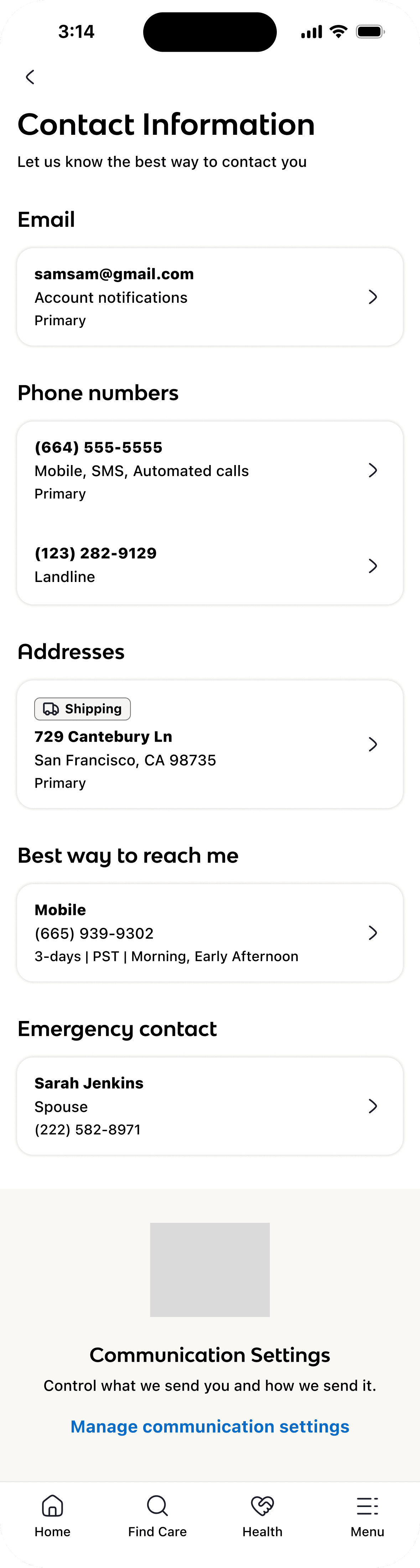

A Shared Data Model Doesn’t Mean a Shared Interaction Model
Sensitive identity information required a different level of transparency than standard profile data. We explained why information was being collected and how it could be used before asking members to make a choice.
Giving Members Control Over How They Identify
Sensitive identity information required more than standard profile controls. We designed clear, optional ways for members to self-identify—giving them control over what they share and how they’re represented, and the ability to update those choices over time.


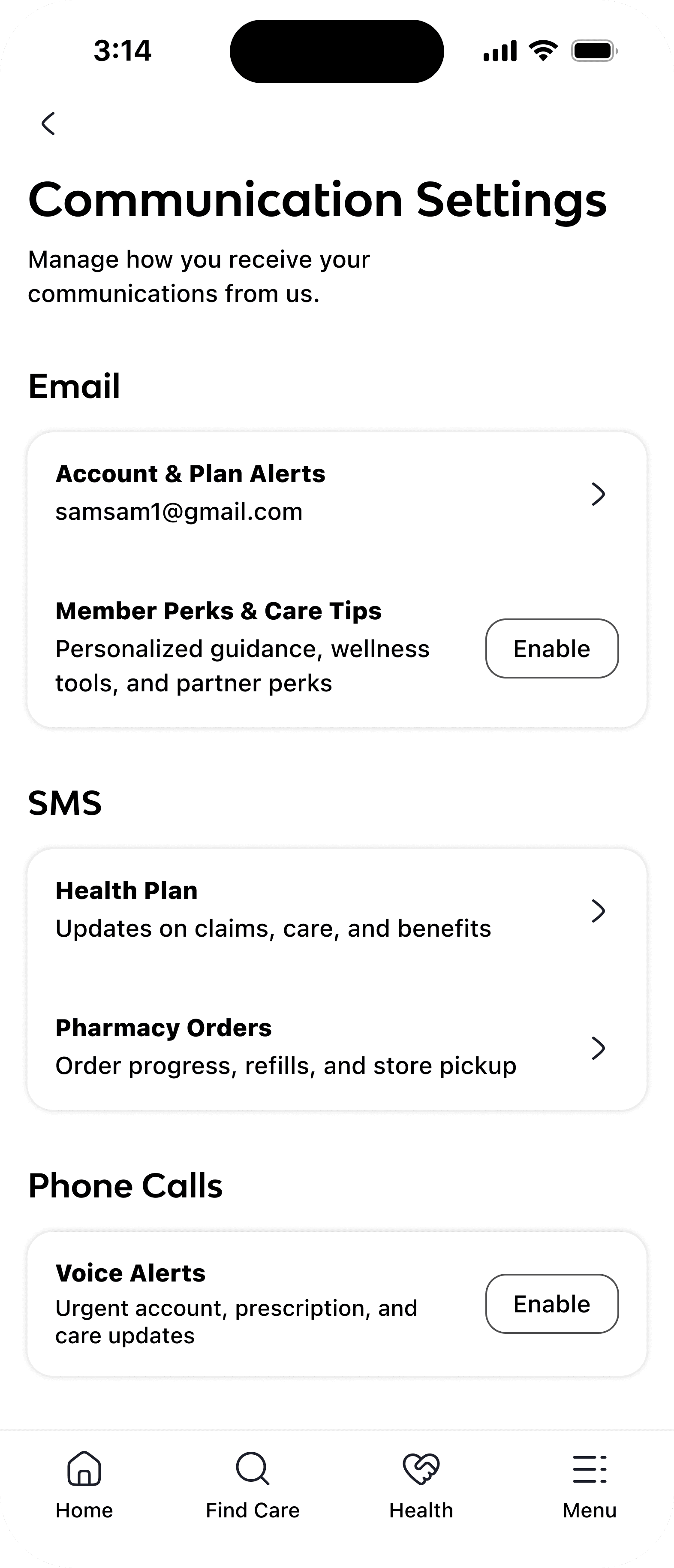
Turning Preferences Into Meaningful Choices
We translated communication, privacy, and sharing preferences into clear member controls—turning complex policies and permissions into choices members could understand and manage themselves.

Impact
One profile foundation.
More connected experiences.
EPMP established a shared model for member information and preferences—giving teams reusable capabilities instead of requiring each product to solve profile independently.
01
A reusable profile foundation
Common patterns and capabilities could be shared across experiences, reducing the need to recreate profile management product by product.
02
Greater consistency across Optum
A shared member model created a more consistent way to represent and manage identity, personal information, and preferences across experiences.
03
A foundation for personalization
Centralizing member context and preferences created the groundwork for experiences to respond more intelligently to who a member is and the choices they’ve made.
Want to know more?
Let's hop on a call to chat about how strategic UX empowers us and helps train smarter systems.